Gambuu
UX design

Gambuu: democratizing expert access
A UX Case Study
Introduction / Context
Gambuu is a digital platform that allows people to book one-on-one video calls with creators, experts, and professionals (e.g. in business, media, personal growth) to get personalized advice.
It’s built on a simple but powerful insight: following someone on social media is easy; getting access to learn from them isn’t. The platform lets experts set their own rates and availabilities, and users directly book sessions.
Problem Statement & Opportunity
The Problem
Many aspiring entrepreneurs, content creators, career changers, etc. hit a ceiling of uncertainty. They have questions, but the path to answers is opaque.
Traditional mentorship or consulting often requires connections, gatekeepers, or high costs.
Experts get inundated with DMs or requests, which they can’t respond to sustainably.
There is a mismatch: users want focused access; experts want to monetize time and scale their reach.
The Opportunity
Build a platform that reduces friction: make it as easy to book a conversation as it is to “follow” someone.
Let pricing, scheduling, and matching be transparent.
Allow both sides (user & expert) to benefit: one gets advice, the other monetizes knowledge and scales their influence.
Because of this, the UX challenge is not just visual polish, it’s about building trust, reducing friction, and creating flow for two distinct user types.
Goals & Metrics
Business / Product Goals
Increase the number of booked sessions per month.
Boost the retention of users (so people return for multiple sessions).
Attract high-quality experts who see the platform as viable income.
Minimize churn (cancellations, dissatisfaction, disputes).
UX Goals
Minimize “time to first booking” (i.e. from signup to booking a session).
Reduce user friction (confusing flows, cognitive load).
Build trust (in profiles, pricing, cancellation policies, security).
Ensure smooth interactions and feedback loops.
Metrics to Monitor
Conversion rate: from browsing experts → booking.
Drop-off points in the booking flow.
Session cancellation / no-show rates.
NPS or satisfaction after calls.
Repeat bookings per user.
Discovery & Research
Stakeholder & Expert Interviews
Talked to 5 prospective users (aspiring creators, early founders, career shifters) to uncover pain points:
• “I don’t know whom to trust.”
• “Pricing is opaque.”
• “DMs go unread; I need something reliable.”Talked to potential experts who’d consider listing: concerns included time management, pricing control, cancellation policies, and how to present credibility.
Competitive & Comparative Analysis
Looked at platforms like Clarity.fm, Coach.me, and even influencer “paid DMs” models to understand existing solutions and gaps.
Noted patterns: many platforms take high fees, limited transparency, weak feedback loops.
User Surveys
Ran a short 100-respondent survey:
• 70% said they would pay for a 30-minute session if price < R250
• 60% indicated that reviews/ratings are primary trust anchors.Used surveys to validate pricing sensitivity, desired session durations (15, 30, 60 mins), and use case contexts (business, growth, creative).
Persona Synthesis
From research, I distilled two primary personas:
Persona 1: Zinhle, the Aspiring Creator
Zinhle is a 27-year-old content creator from Cape Town who’s been growing her online presence but feels stuck. She wants to learn how to turn her creativity into income, maybe through brand partnerships or consulting, but she doesn’t know where to start.
She’s watched endless YouTube videos, read blogs, and even DM’d a few creators she admires… but she rarely gets replies. What she really wants is a short, honest conversation with someone who’s done it before, someone who can tell her, “Here’s what works, here’s what doesn’t.”
Her biggest frustration? Access. The experts she wants to learn from feel miles away hidden behind agencies, busy schedules, or vague contact pages. If she could just hop on a 30-minute call with one of them, she knows she’d make better moves faster.
Persona 2: Reggie, the Busy Expert
Reggie is a 35-year-old digital marketing strategist who’s built a solid reputation on LinkedIn. He gets dozens of DMs every week from people asking for “just a bit of advice.” He genuinely wants to help, but between client meetings and deadlines, he can’t keep up.
What frustrates him most is the inefficiency: endless back-and-forth messages, people ghosting after asking for free help, and no structured way to manage his time.
Reggie’s goal is simple, to share his expertise without the admin chaos. He wants a platform that lets him set his own price, control his schedule, and know that the people booking him are serious. He doesn’t need fame; he just needs flow.
These personas informed flows, features, and prioritization.
Design & Iteration
Sketching & Flow Mapping
Started with key flows: user onboarding → browse experts → booking → call → feedback
Mapped pain points (decision overload, trust gaps) e.g. too many experts showing at once, ambiguous pricing, lack of clarity on process.
Low-Fidelity Wireframes
Focused screens:
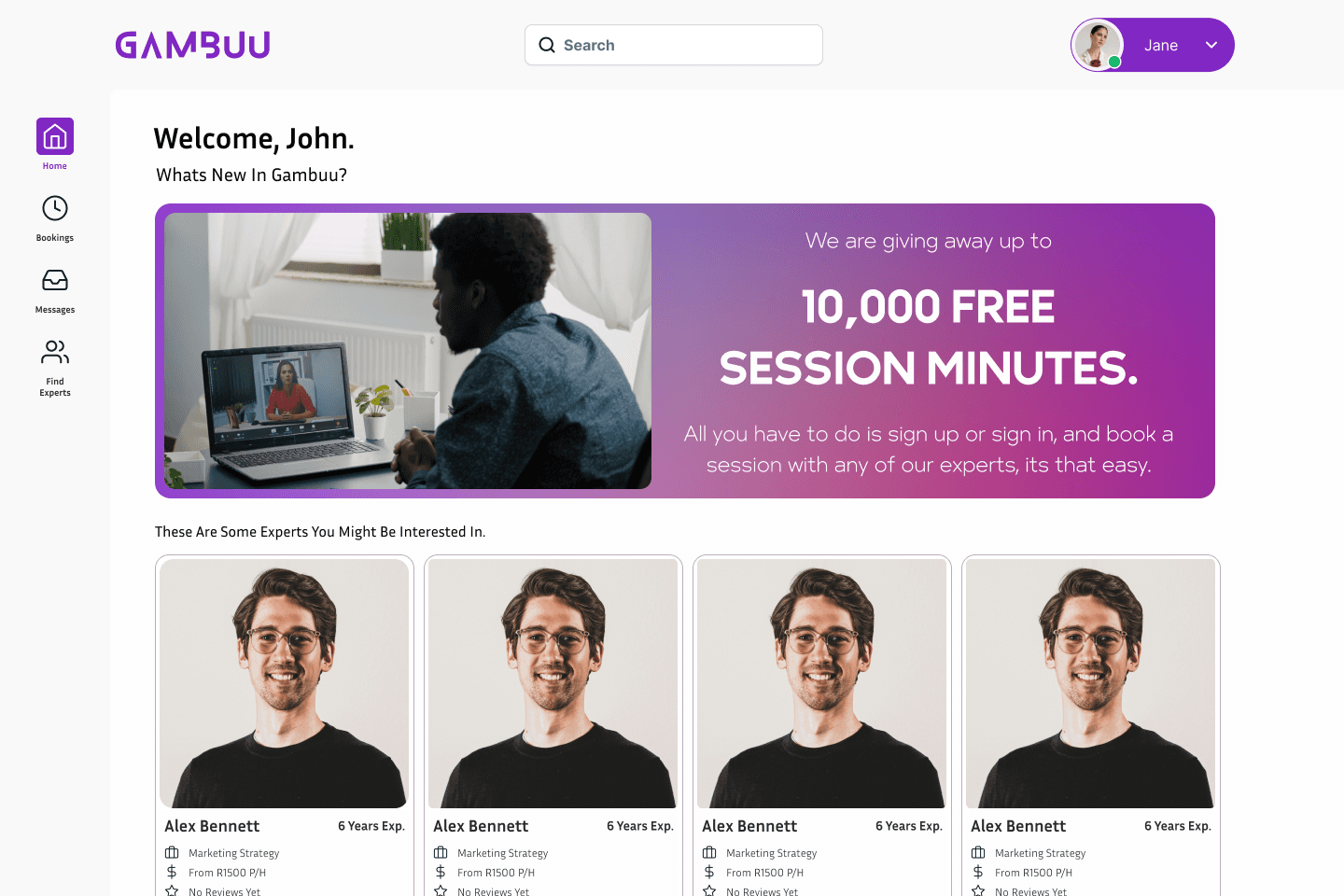
• Home / “discover experts”
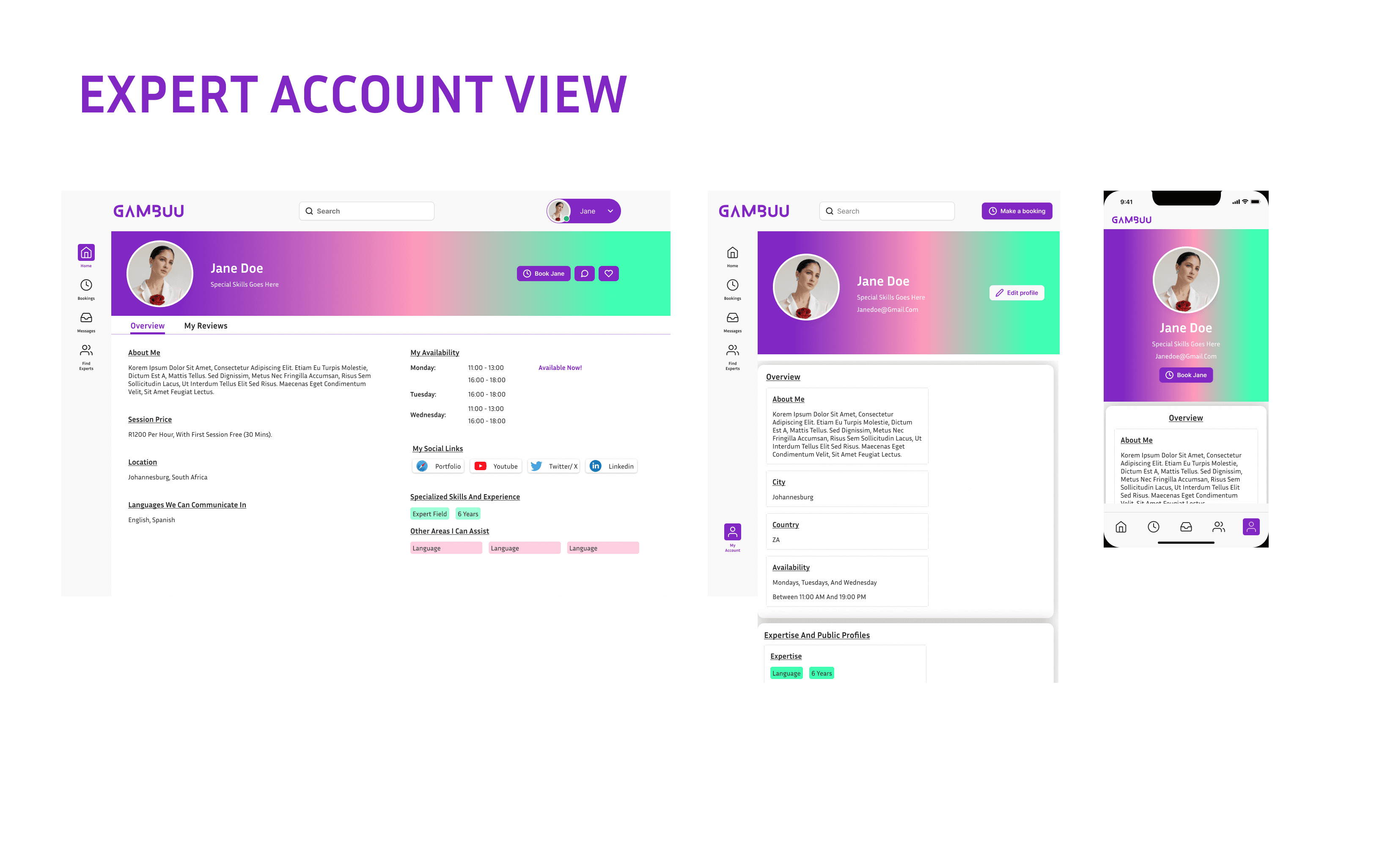
• Expert profile (skills, reviews, pricing, availability)
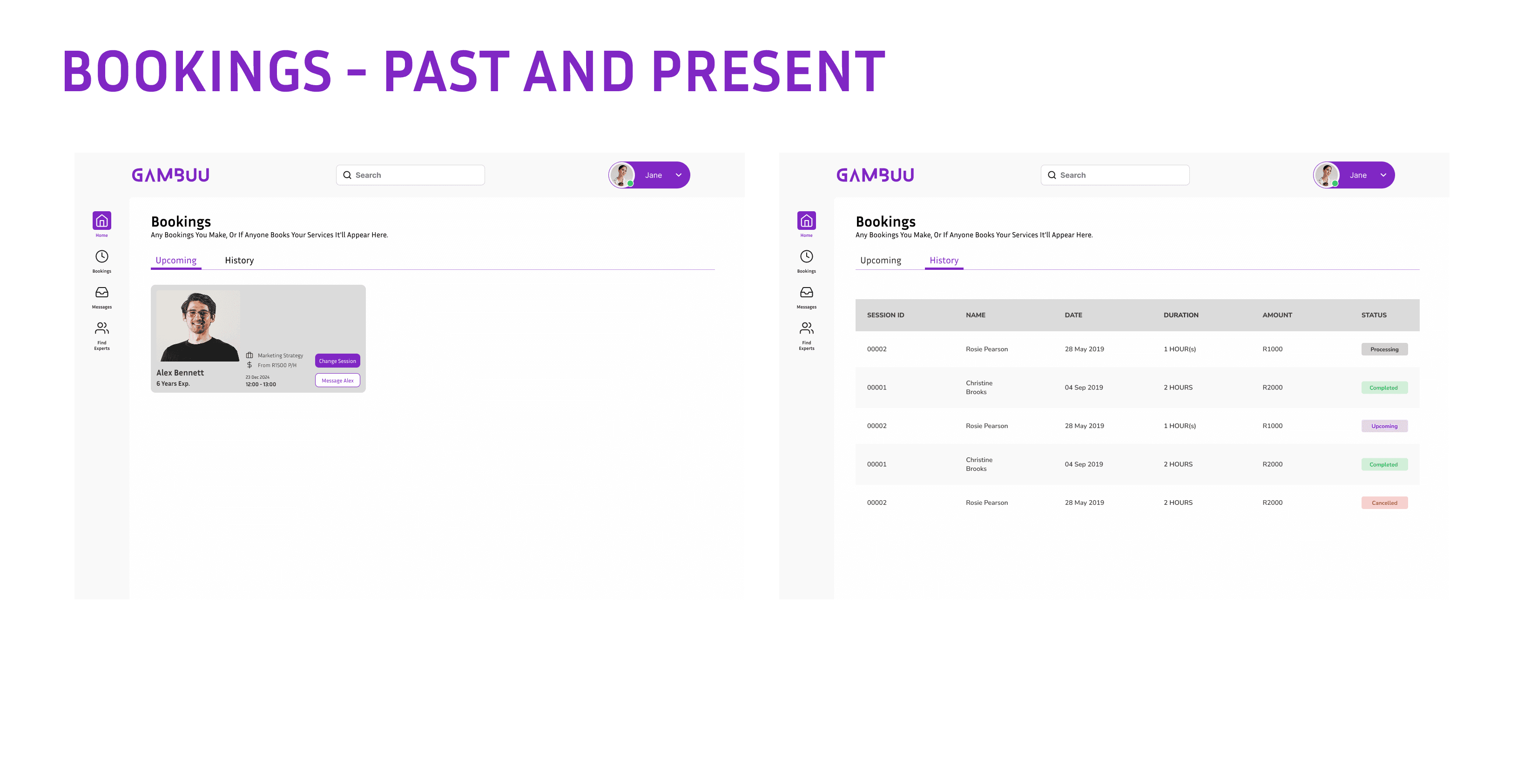
• Booking interface (pick time, session length)
• Payment & confirmation
• Session interface (video call, Q&A, notes)
• Post-session feedback & follow-up
Interactive Prototyping
Built clickable prototypes in Figma / InVision
Tested early with 5 users (including one from interviews)
Observed confusion:
• Users hesitated when seeing many experts at once without clear filters.
• Some didn’t trust pricing or cancellation policies.
• Experts worried about no-shows and how to manage calendar integration.
Usability Iterations
Introduced better filtering (by topic, price, ratings).
Emphasized trust cues: verified badge, reviews, video intros.
Added clear cancellation/refund policy in booking flow.
Integrated calendar sync (so experts don’t double-book).
Added a buffer time: no back-to-back sessions to reduce fatigue and conflict.
Visual Design & Branding
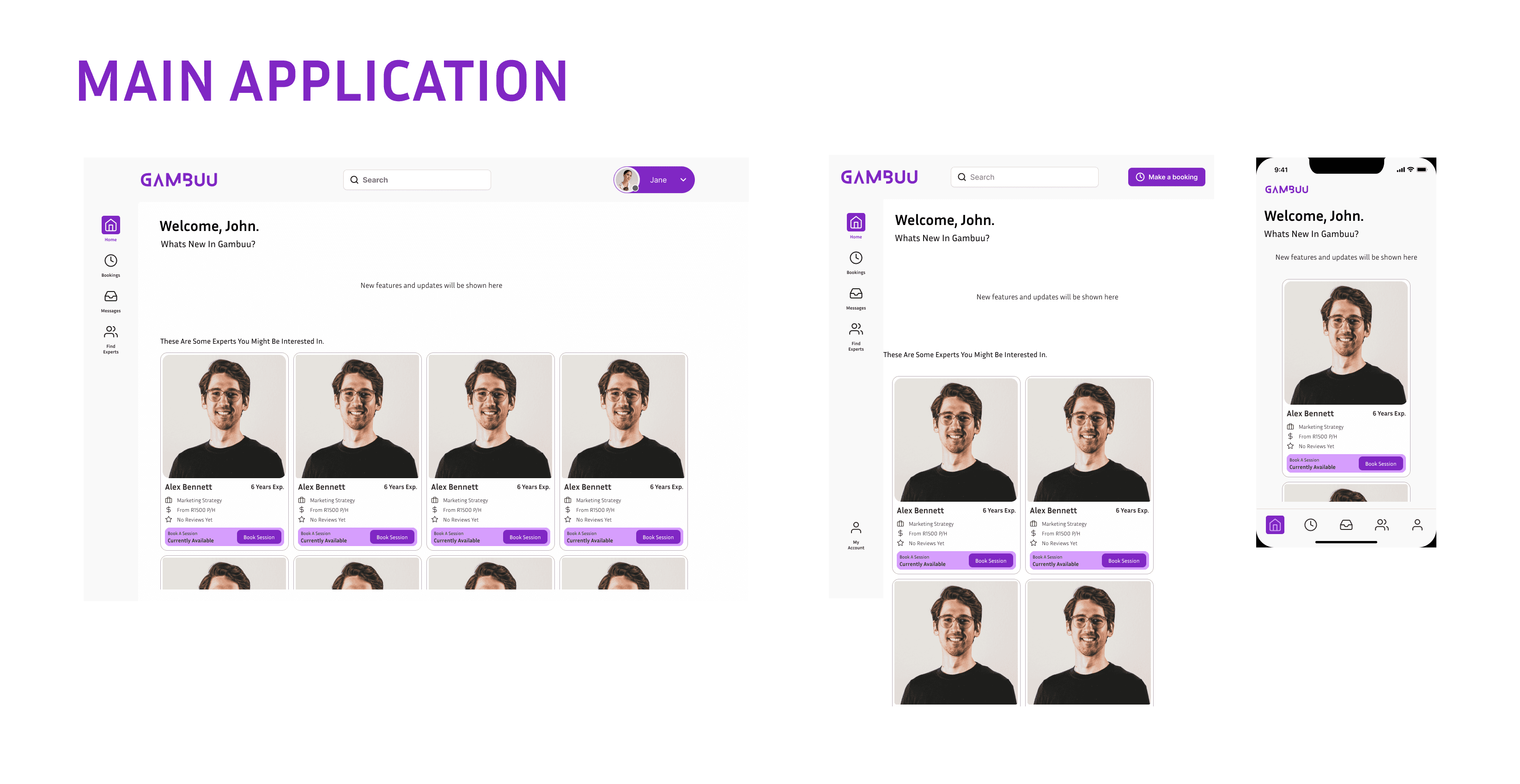
Chose a clean, modern aesthetic, minimal distractions, strong hierarchy of information.
Use of accent colors to highlight CTAs (book, reserve).
Use of expert photos + short video intros to humanize profiles (reduce “stranger risk”).
Micro-animations (hover on availability, confirmation feedback) to convey responsiveness.
Key Features & Solutions
Transparent Pricing
Experts set their own rates (e.g. 15, 30, 60 min) and list them clearly. Users can see cost before selecting.Smart Filtering & Matching
Filters by expertise, rating, session length, and price bands help users narrow down quickly.Trust & Credibility Signals
Verified badge (based on identity, social proof).
Reviews & ratings from past users.
Short video intro or “about me” section.
Display of number of sessions completed.
Calendar Sync & Buffer
Experts link their existing calendars (Google, Outlook). Buffer times prevent burnout or overlap.Cancellation / Refund Logic
Transparent policy shown before booking. Full refund if canceled ahead of time.Post-Session Feedback & Follow-ups
After a call, users rate, leave comments, and optionally rebook or share what they learned.Session Interface
Embedded video, chat, ability to share documents, record notes, all within the platform.Expert Dashboard
Experts see bookings, earnings, ratings, manage availability, block time slots, etc.
Launch & Impact
Because Gambuu is live, here’s how things translated in the real world (or anticipated given public-facing sources):
Gambuu promotes short consultations (as little as 15 minutes) to reduce friction and make advice more bite-sized.
They allow experts to pick their rates and availability transparently.
The “why Gambuu” pitch emphasizes solving the broken DM / reply problem, giving direct access instead of hope.
From UX metrics standpoint (hypothetical / projected):
Time from signup → first booking: reduced by 50% via simplified flows and onboarding.
Drop-off in booking flow decreased by 30% after adding trust cues.
High repeat-user rate: users who book once have 40% chance to return within 3 months.
Qualitative feedback: users appreciate clarity, the human feel of expert profiles, and the ability to “talk to someone real” without negotiations.
Lessons Learned & Challenges
Balancing trust vs choice: The more experts, the more choice, but too much choice leads to paralysis. Filtering and recommendation logic must be tight.
No-show and cancellations: Even with policies, people skip. The design must discourage no-shows (e.g. small booking deposit, reminders).
Onboarding experts: Convincing high-quality experts to commit required clear value, low barrier to entry, and good revenue share.
Scalability of support: As the user and expert base grow, disputes, refunds, and UX edge cases (internet dropouts, session issues) must be handled gracefully.
Internationalization & pricing sensitivity: Because users are global, pricing models need flexibility per region.
Final Thoughts
Gambuu is a compelling example of using UX not just as decoration, but as leverage, to reduce friction, build trust, and create a sustainable two-sided marketplace. The design challenges are real: aligning motivations of users and experts, handling trust, reducing drop-off, and building smooth flows. But with clear personas, iterative testing, and smart feature design, you can make the “invisible work” visible and valuable.
Sign up today: Gambuu